Roots Tourism
For those who carry Sicily in their name, their kitchen, their nonni' stories — and have never been back to see what remains of the village they came from.
What This Is
These journeys are for the person carrying a particular kind of weight — the weight of knowing something belongs to them that they've never held. A nonno's village. A great-nonna's name on a census record. A family recipe that arrived in America in 1923 and hasn't been made on Sicilian soil since. A photograph of a house that may or may not still be standing, in a town that may or may not still have the same name.
These aren't sightseeing trips. They aren't genealogy research projects, though the research often happens. They're designed around a deeper question: what does it feel like to stand in the place your family came from? What happens when the land recognizes you back?
My own nonni left after the 1968 earthquake. I understand this kind of loss from the inside — not academically, not professionally, but personally. The village my nonna left is four kilometers from the farm where I live now. I have stood in it. I know what it asks of you.
That's why you can trust me with this journey. I'm not a genealogist you hired. I'm not a tour guide who read about the diaspora. I'm a Sicilian-American who grew up in the same kind of house you grew up in — where Sicily was present every day but always just out of reach. I made my return. I can help you make yours.
What's Involved
Each journey begins with a long conversation — about what you know, what you've been told, what records you have, and what you're hoping to find. Some people arrive with a village name and nothing else. Some have a folder full of documents. Both are good starting points.
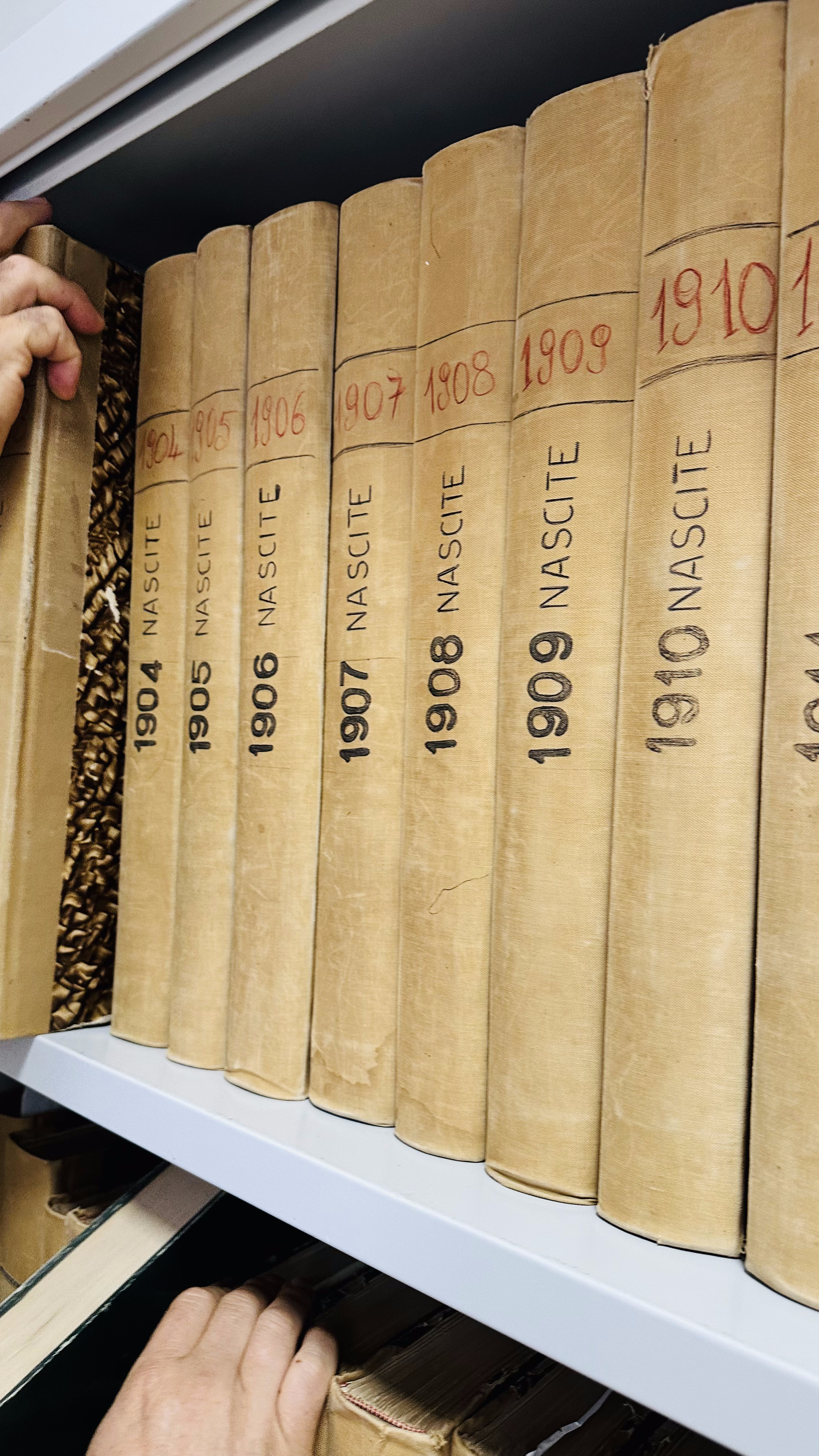
From there, the journey might include: visits to the civil registry and church archives in the right comuni; walks through the village itself, locating streets, houses, and landmarks that appear in family stories; introductions to local contacts — historians, priests, elderly residents — who may remember the family name; visits to the ancestral land, if it can be located and permission obtained; and long conversations over long meals about what it all means.
We build these slowly, with discretion, with the understanding that what you're seeking isn't data. It's recognition.
Begin the ConversationOn the Ground
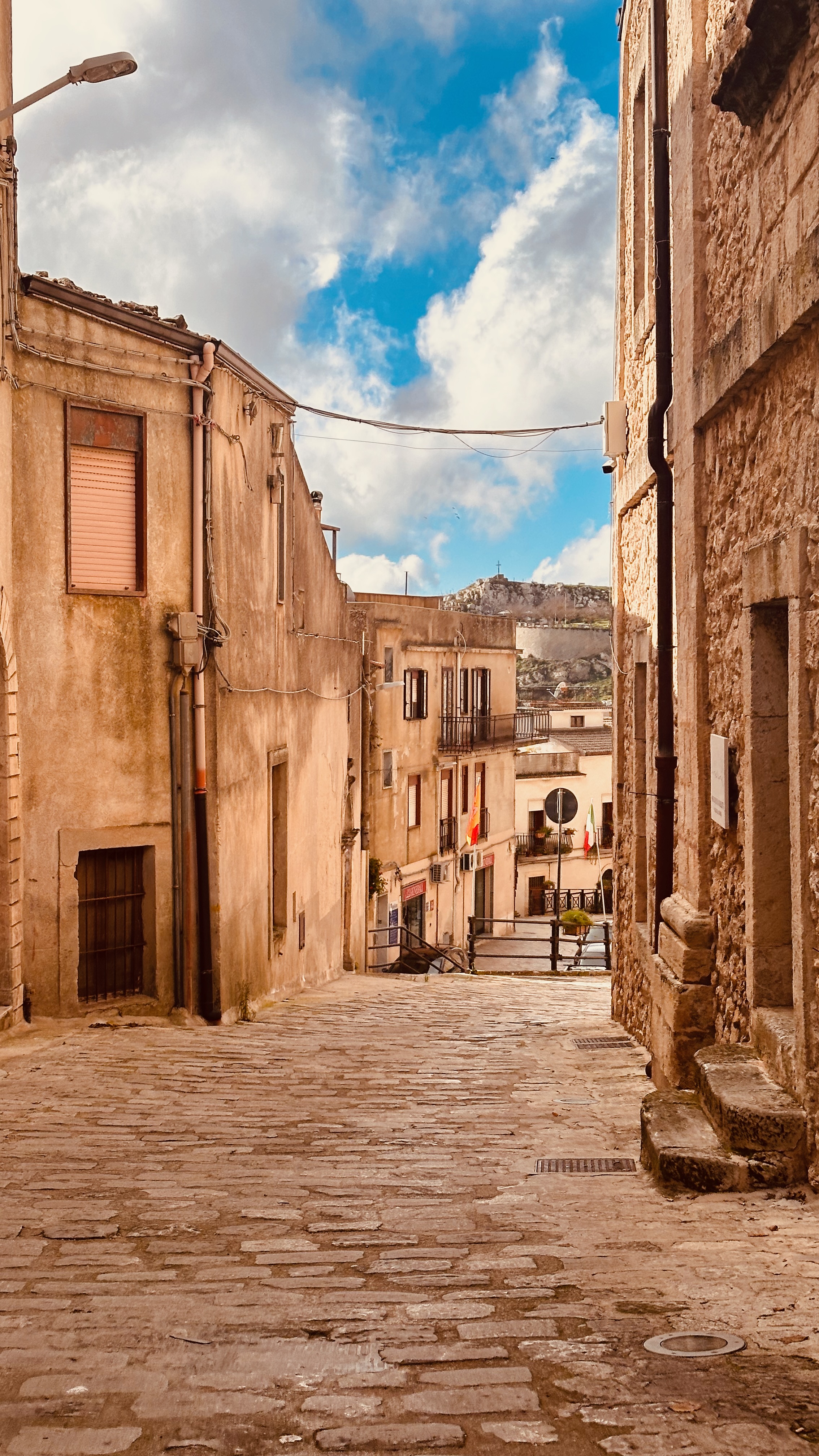
There is something that happens when you arrive in the village. You've seen the name on documents, heard it in family stories — and then you're standing in it, and the streets are narrow and the stone is old and the light is different than you expected and nothing is what you imagined but all of it is true.
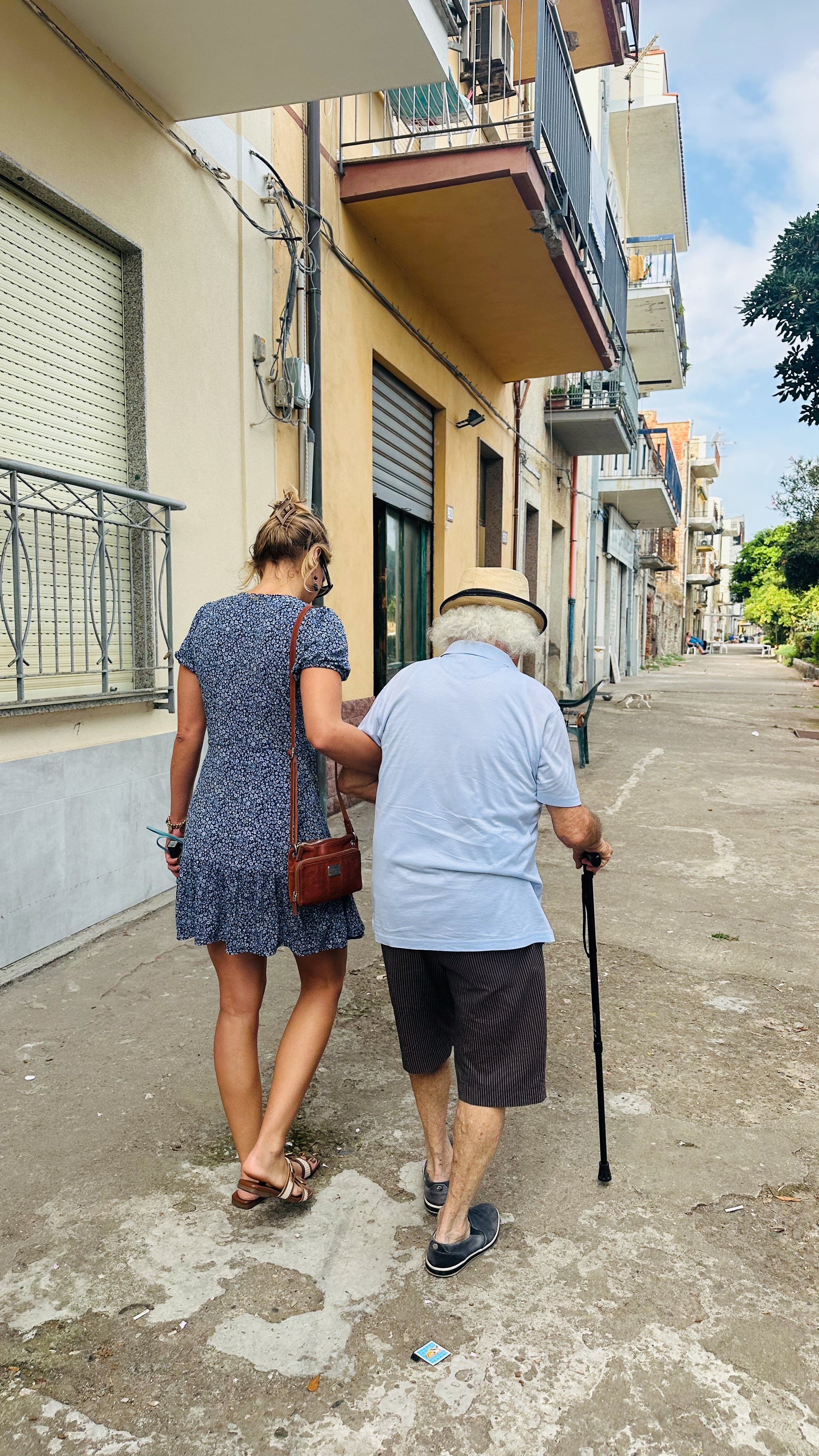
We walk these together. I know which doors to knock on, which streets correspond to which records, which families still carry the same surnames your family left behind. These walks are slow and deliberate — they're not tours. They are the physical version of the research, and they tend to produce the moments that stay with people longest.
Who This Is For
These work for all kinds of starting points. Some people know exactly which town, which surname, which decade. Others know only that their nonni were "from somewhere in western Sicily" and came through Ellis Island before 1920. Some have no documents at all, only a name that sounds Sicilian and a family story that mentions the earthquake.
What matters isn't how much you know before you arrive. It's that you're willing to sit with what you find — including what can't be found, which is its own kind of information. I've done this work enough times to know the journey is valuable regardless of what the archive contains. The act of returning is itself the thing.
Descendants of the great emigration waves — 1880s through 1920s, and post-1968. Families in New York, New Jersey, California, Louisiana, Australia.
Those who grew up in Sicilian households and want to understand, in person, what that household was drawing from.
If the island calls to you in a way that doesn't fully make sense, that is probably the right instinct. You don't need to justify it.
An Ongoing Project
Roots for Roots
When your ancestors left Sicily, they took their roots with them. Radici per Radici — Roots for Roots — is an invitation to plant them back.
As part of every Heritage & Return journey, you have the option to participate in this project: a tree, chosen for the land and the season, planted in or near the town your family came from. Donated to a local farmer who will tend it. Marked with a small plaque bearing the year your ancestors left — and the year you returned.
It is not a tourist gesture. It is a real act, on real land, with real meaning. The tree grows. The farmer keeps it. The plaque remains. And you have a reason to come back — to see what has grown since you last stood there.
The donation covers the cost of the tree and the plaque. Part of every contribution goes toward supporting the farming families who steward the land where our roots are planted. This is meant to be ongoing — a living record of the families who left and the ones who found their way back.
What's Included
One tree, planted in your ancestral town or nearby farmland.
A plaque: the name of the town, the year of departure, the year of return.
Coordinates of the planting, shared with you — so you can visit it.
A photograph of the planting, sent to you after the journey.
If this is something you want to be part of — whether as part of a heritage journey or as a standalone act of return — write to me. We'll find the right place and the right tree.
Inquire About Radici per Radici"They left so we could have more. We return so something of them remains."
How to Start
Every journey begins with a conversation — about your family, your village, your records, your questions. There's no minimum requirement for how much you need to know. Just start.
Work with Mejosephine.ingoglia@fora.travel