

Josephine Ingoglia-Sparacia
"I grew up in a Sicilian household in Queens. I spent every summer of my life in Sicily. My husband is a fifth-generation olive farmer from Partanna. I eventually stopped pretending I was just visiting and moved there permanently. Isola Marea grew from all of that — it's not a tour company, it's a way of sharing what I know and what I belong to with people who feel the same pull I always did."
The Founding Story
I grew up in a multigenerational Sicilian household in Queens, New York. My grandparents had left after the 1968 earthquake — the disaster that destroyed dozens of villages in western Sicily and sent families across an ocean looking for something other than rubble. They rebuilt in Queens, but Sicily was never truly left behind. It came to the table at every meal. It came up in every argument. It was present in the smell of my grandmother's kitchen, in the dialect spoken between adults when they thought children weren't listening, in the particular grief of people who know exactly what they lost and exactly where it still is.
I spent every summer of my life in Sicily. Not as a tourist — as a returning family member. I knew the roads, the rhythms, the etiquette of arriving unannounced at a relative's house and being fed within ten minutes. I knew which towns had the best pastry and which had the best view and which had the thing that couldn't be described to anyone who hadn't been there. I also knew I was experiencing it from one angle — the angle of the diaspora, the visiting grandchild, the American who spoke Sicilian but lived somewhere else.
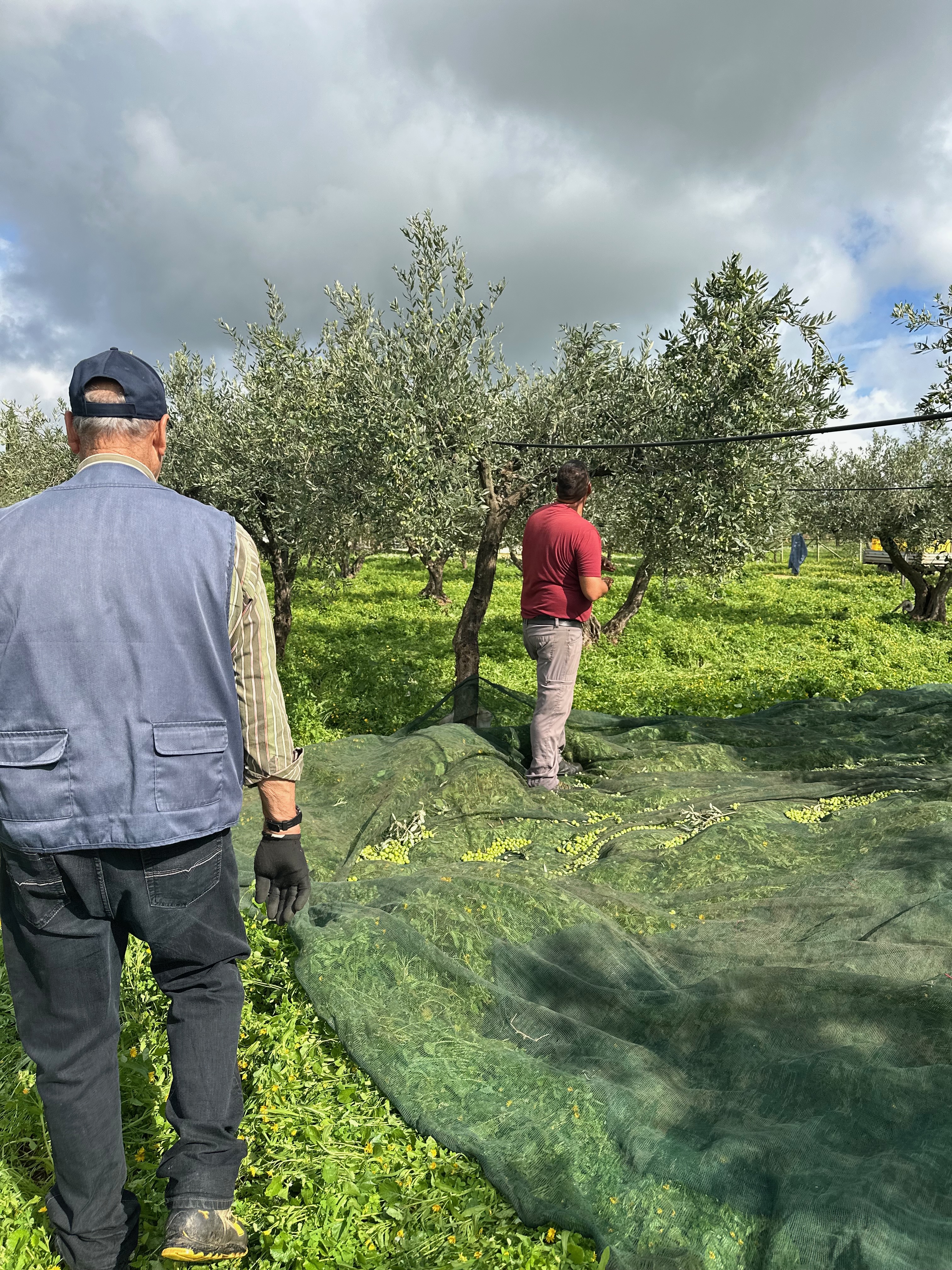
After a career in luxury retail — MAC Cosmetics, then Saks Fifth Avenue — I met my husband in 2009. He's a fifth-generation olive farmer from Partanna. His family's land is in the same region my grandparents' families came from. This wasn't a coincidence that anyone in either family found remarkable, because in Sicily these things aren't coincidences. They're called destino.
After 2020, I relocated to Sicily permanently. I didn't leave everything behind. I finally stopped pretending I hadn't already arrived.
Isola Marea grew from a question I was asked constantly, once I was living there: how do I do what you did? How do I find the Sicily you're describing? How do I go back?
The answer was never a tour itinerary. It was a relationship. And the relationships that make Isola Marea possible — with the families, the communities, the land — can't be replicated by anyone who came to Sicily as a visitor. They took decades to build and they're the reason any of this works.
What Isola Marea Is Not
Isola Marea isn't a service business. It's an identity experience — a way of sharing access, knowledge, and belonging with people looking for something specific. Not the curated version of Sicily. Not the luxury resort version. The real version, with all of its slowness and its specificity and its refusal to perform for anyone.
I'm not a guide. I'm Sicilian, by blood and by choice. My husband's family farm isn't a prop — it's a living, generational agricultural reality. The experiences aren't designed for tourists. They're designed for people coming home.
If you know the difference, you're probably already feeling the pull.
See What We OfferWhy Isola Marea
There are many ways to go to Sicily. Travel agencies can book the flights and the hotels. Tours can take you to the ruins and the markets. Luxury operators can arrange the private vineyard dinner and the cooking class in the farmhouse. These things exist. They're fine. They're not what I offer.
What I offer is access to a version of Sicily that doesn't present itself to strangers. The relationships I've built over decades in western Sicily — with families in rural villages, with farmers and craftspeople and women who haven't met many tourists and have no interest in doing so — are the primary asset here. Not a concierge service. Not a network of vetted suppliers. Actual human relationships in which I'm trusted, and in which, by extension, the people I bring are trusted.
My husband's generational land isn't a venue. My own cultural fluency — in Sicilian, in the rhythms of rural life, in the particular way that western Sicilian hospitality works — isn't a performed service. It's who I am. The differentiator is me, not the package.
I work with a small number of guests each year. This isn't a scarcity tactic. It's a reflection of how many people can actually be served well by one person who belongs to a place and refuses to pretend otherwise.
Begin the Conversation
I respond personally to every inquiry. Tell me what you're looking for, or what you feel the pull of. The conversation will go from there.
Write to Mejosephine.ingoglia@fora.travel