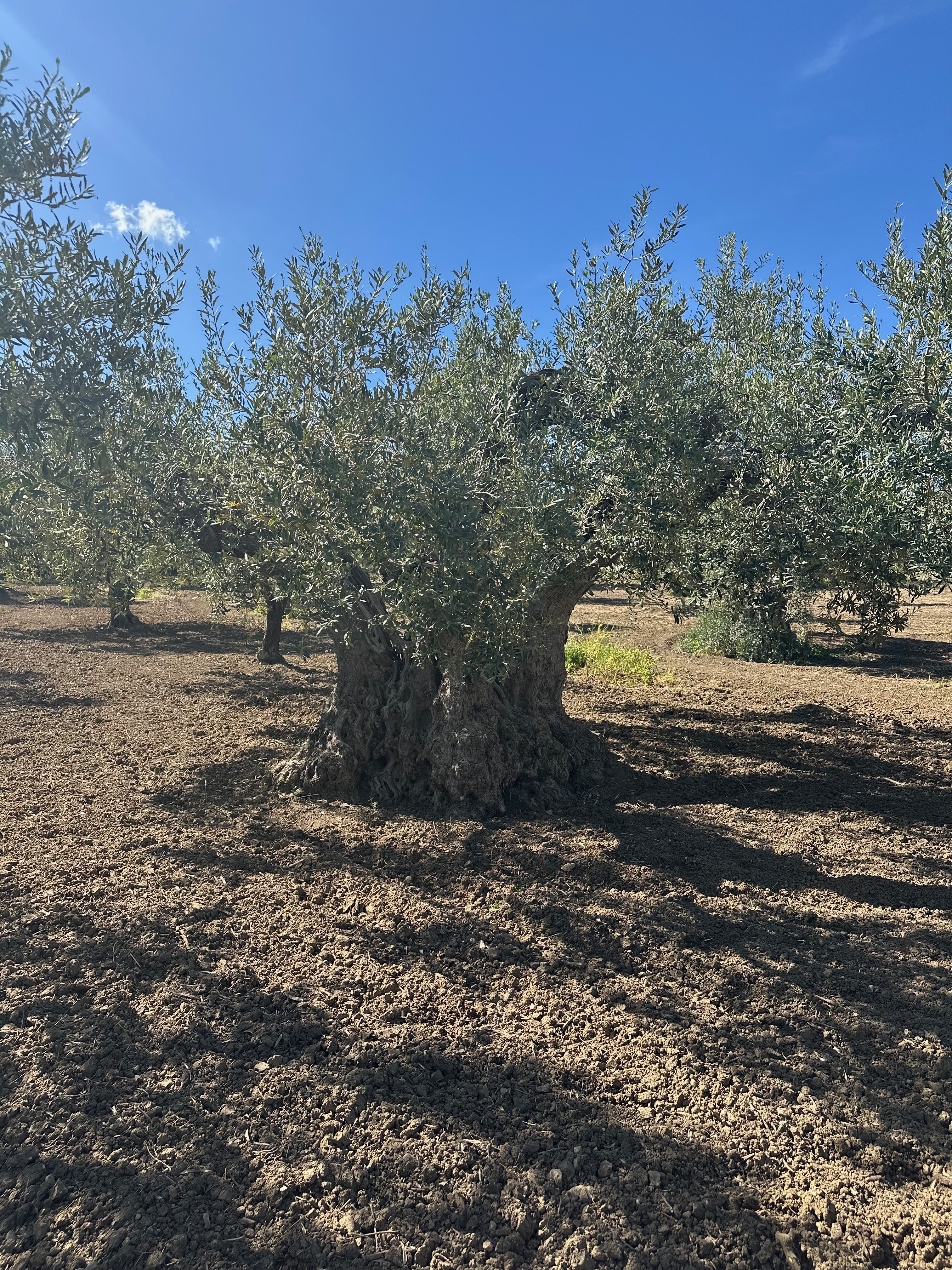
Partanna, Western Sicily
A living inheritance.
Not agriturismo.
Five Generations
My family has farmed this land in Partanna for five generations. The olive trees that stand here were planted before anyone alive was born — some of them centuries before. They've been pruned by the same family across seasons that had different names for the same work. The oil they produce has been pressed in the same November darkness, the same smell, the same result, for longer than the family has records to count.
I came to this land in 2009, when I met my husband. I arrived as someone who'd grown up knowing Sicily from the outside — the stories, the food, the nonni who left. The farm made me understand what it meant to know it from the inside. From underneath. From the roots.
I founded Isola Marea partly because of what this land gave me: the knowledge that belonging to a place isn't the same as visiting it, and that the difference is something other people deserve access to.
The Trees
The oldest trees on this land aren't counted in decades. They're counted in generations — in how many times the same family has pruned them, gathered under them, measured the harvest against the memory of the harvest before. In Sicily, olive trees of a certain age are understood to be part of the family. They're not assets. They're elders.
Pruning happens in January and February, when the trees are dormant and the air is cold and the work is slow and deliberate. The shape of the cut matters. The angle. What you leave and what you take. My husband learned this from his father. His father learned it from his. The knowledge passes the way it passes in agricultural families — by doing, beside someone who already knows.
Guests who come during pruning work alongside us. Not as students. As people who showed up and were handed a pair of shears.
Late October — November
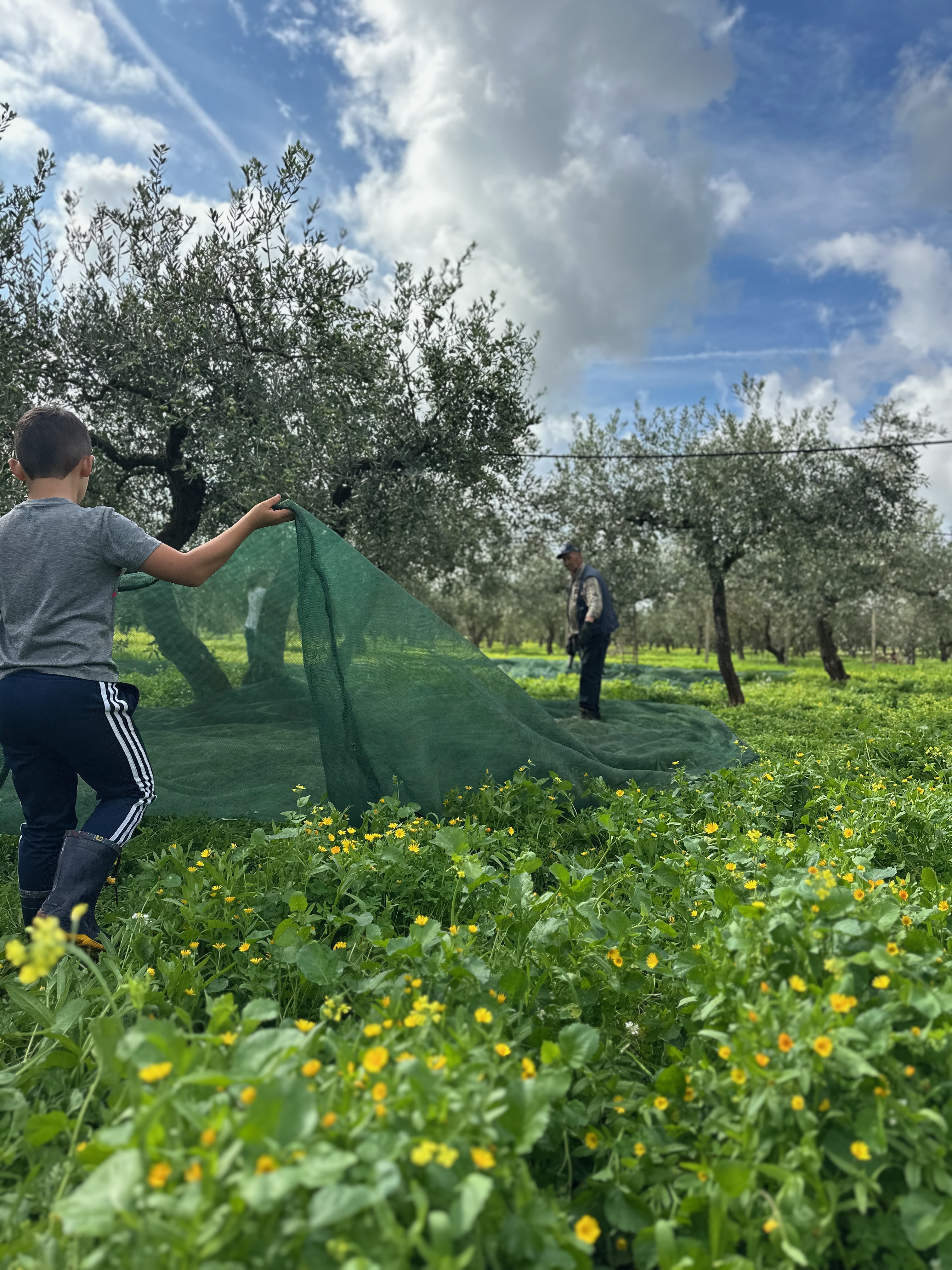
Harvest is the most intense and most beautiful moment of the Sicilian agricultural year. It arrives in late October when the olives have reached the color that means they're ready — not fully black, not still green, but somewhere between, a kind of bruised purple that the family reads the way other people read a clock.
The picking is done by hand, with nets spread beneath the trees to catch what falls, and rakes to draw the olives from the higher branches. The family works together, and the people we trust work alongside us. The oil is pressed within hours of picking, in the dark, because the press runs when the load is ready and the load is ready when it is ready.
The oil that comes out at the beginning of pressing is called olio nuovo — new oil — and it's unlike anything sold in a bottle anywhere. Peppery, grassy, slightly bitter. It goes on bread. It goes on everything. It's the taste of the year just harvested.
Inquire About Harvest Season
December — March
Winter on the farm isn't empty. It's quiet in the way that rural Sicily is always quiet in winter — with a different quality of attention. The olives are pressed. The oil is stored. The vines are dormant. The light is lower and softer than it is in summer, and the work becomes the kind of work that can be done more slowly.
I champion the off-season in Sicily because it's when the island belongs to itself — not to visitors. Villages that are closed to real conversation in August are open in February. The people who live there are home. The pace of life reveals itself. The food changes: long-braised meats, dried legumes, the vegetables that come in cold weather. The conversations, around tables that don't clear until much later in the evening, become something different from what happens in summer.
Winter guests come fewer and leave differently. There's something in the experience of Sicily in its dormant season — something about understanding rest as part of a cycle, not an absence — that tends to stay with people in a way the summer doesn't quite replicate.
Come to the Farm
The farm isn't open to the public. Every guest arrives through a conversation with me. If you're interested in being present for any part of the farm's year, begin here.
Write to Mejosephine.ingoglia@fora.travel